Everything about this company, their service and its people is amazing. Booked an appointment, they installed and tested my EV charger in less than an hour. Prices are also very reasonable.

Your business generates its own electricity from rooftop, ground-mounted or carport panels, and uses that power right where the work happens. When most of your consumption falls within daylight hours, a correctly sized system noticeably cuts how much electricity you buy from the grid.
A study based on twelve months of bills, at no cost and with no commitment.
Typical working day. A bigger red area means quicker payback, since every kilowatt-hour displaces electricity you would otherwise have to buy.
GOOGLE REVIEWS
Automatically updated
A selection of 5-star reviews is shown here, while the average rating and total count reflect every review we have received.
A business roof is usually the largest unused asset a company owns. Covering it with generating capacity converts a fixed overhead into something you control, reducing exposure to tariff increases for the next quarter of a century.
Commercial electricity prices here track fuel costs and emissions charges, both of which have climbed steadily. Firms drawing heavily during daylight hours, which describes most of the Cyprus market, sit in an unusually strong position, because production and demand overlap naturally.
Cyprus enjoys some of the best sunshine in Europe, and although winter output drops, it falls far less than in northern Europe. Spring and autumn produce strong figures too, since cooler days help panels run efficiently, so you know from the outset roughly what yield to expect each year.
Refrigeration, air conditioning and lighting run all afternoon, so almost everything the panels generate is used on site.
Laundry, pool pumps and cooling run through midday, and with battery storage, any surplus also covers the evening shift.
Nine-to-five hours, large roofs and steady loads: a combination delivering the island's quickest payback.
The rules have changed, and system design has adapted with them, since returns no longer come from power exported to the grid.
Net billing has long been the route for commercial and industrial connections, distinct from the retail-rate net metering that applied to households until it closed to new applicants at the end of 2025. Applications run through the Electricity Authority of Cyprus in its capacity as Distribution System Operator, and the price paid for exported units is determined by the energy regulator, CERA, in line with prevailing renewable market rates.
That asymmetry sounds like a drawback, yet it simply relocates where value sits. Every kilowatt-hour consumed on site is worth the full retail price you avoid paying, so design should target daytime load instead of maximum export.
Since the export rate is lower than what you pay for grid electricity, the real benefit comes from each kilowatt-hour you use yourself, so getting the system size right matters more than filling every inch of roof space.
We review twelve months of bills, pinpoint when your consumption peaks during the day and calculate how closely solar output matches it, adding batteries wherever the two fall out of step.
A company with several premises can reduce bills across more than one meter from a single installation.
It suits retail chains, distribution companies and organisations whose largest roof sits at a site with low consumption, although eligibility conditions apply, and we check these before the assessment begins.
Our process stays consistent across every project, although each solution is shaped by the building and whatever space is available.
Our commonest configuration for business premises, typically between 20 kW and 500 kW, mounted on ballasted frames for flat industrial surfaces or rail systems where a pitch exists. Most membrane roofs need no penetration whatsoever.
20 kW to 500 kWSuited to sites holding spare land, starting around 100 kW. Tilt angles get optimised for Cypriot latitude, with row spacing calculated to prevent self-shading through the winter months.
from 100 kWWaterproof structures shading parking areas while producing electricity, frequently paired with EV chargers. Municipalities, shopping centres and office campuses favour them wherever usable roof area runs short.
with EV chargersLarger developments built for investment return rather than on-site use, a field Gesolar has operated in since the original feed-in tariff scheme.
up to 8 MWOff-grid solutions serving agricultural pumping, remote facilities and any location where connection costs prove prohibitive.
off-gridRetrofitted or integrated from the outset, extending usable output into non-daylight hours and holding critical circuits live during an outage.
backup power and after-hours shiftsThey span net billing connections, Feed-in Tariff contracts, self-generation, solar parks, standalone off-grid systems, plus residential and commercial net metering.
That experience shows whenever something difficult comes up, because no two roofs are alike, older buildings hide surprises and grid connection points vary from one district to another.
Having seen thousands of cases, our engineers spot potential issues early rather than discovering them halfway through the job, and our installation teams can reach anywhere on the island within one working day.
Pitched roofs, flat rooftops and industrial buildings across Cyprus, handled by our own installation teams from day one through to grid connection.
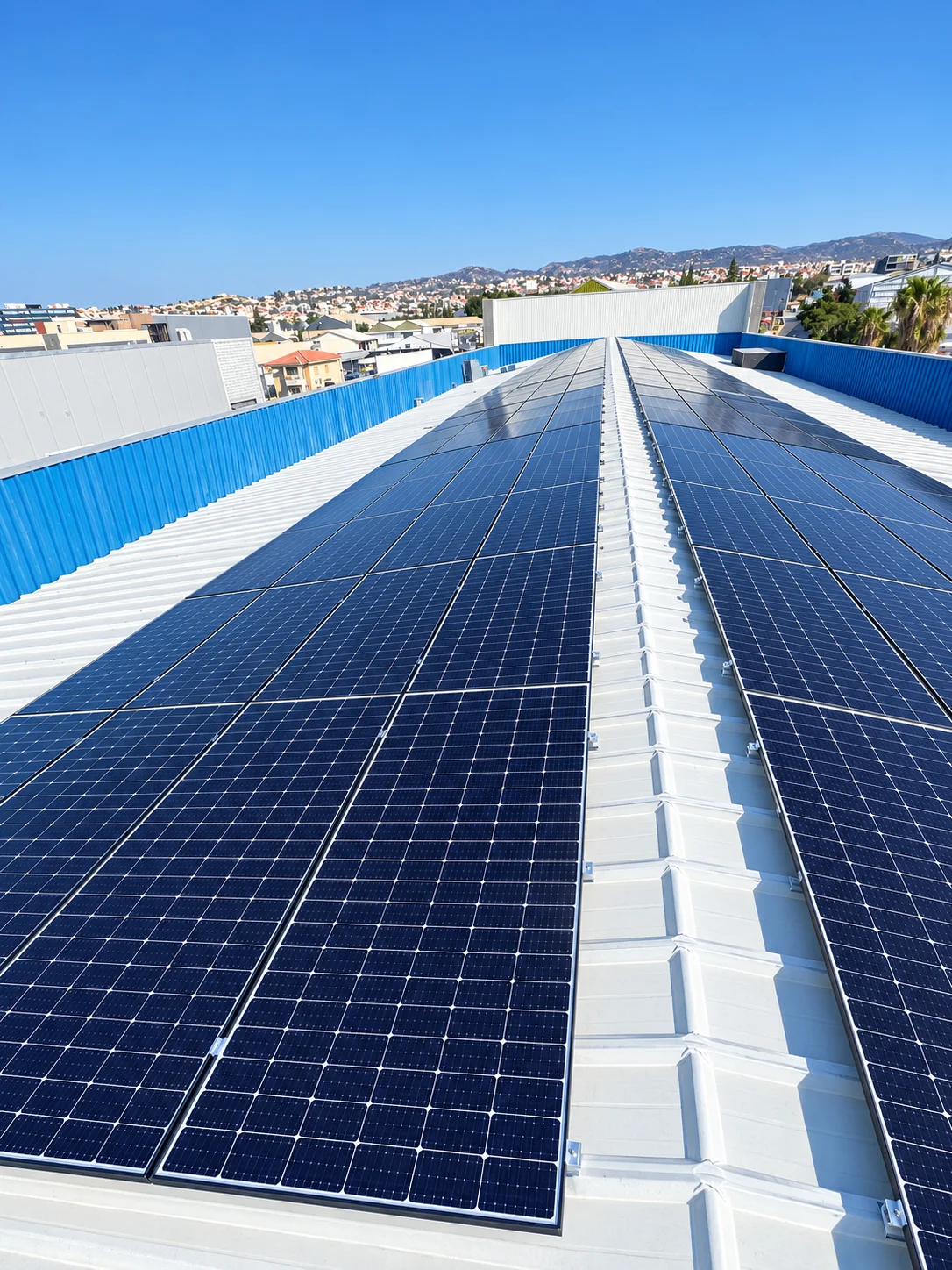
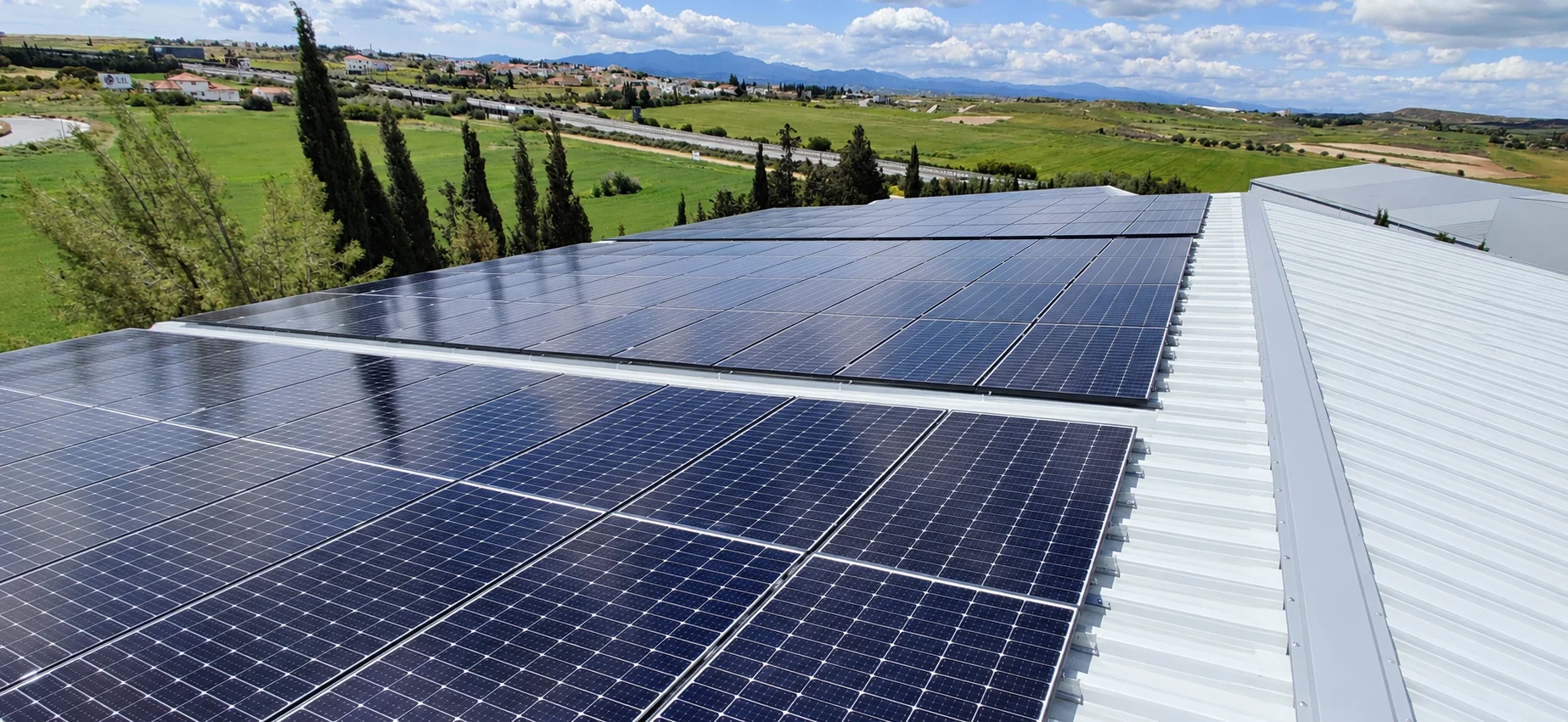
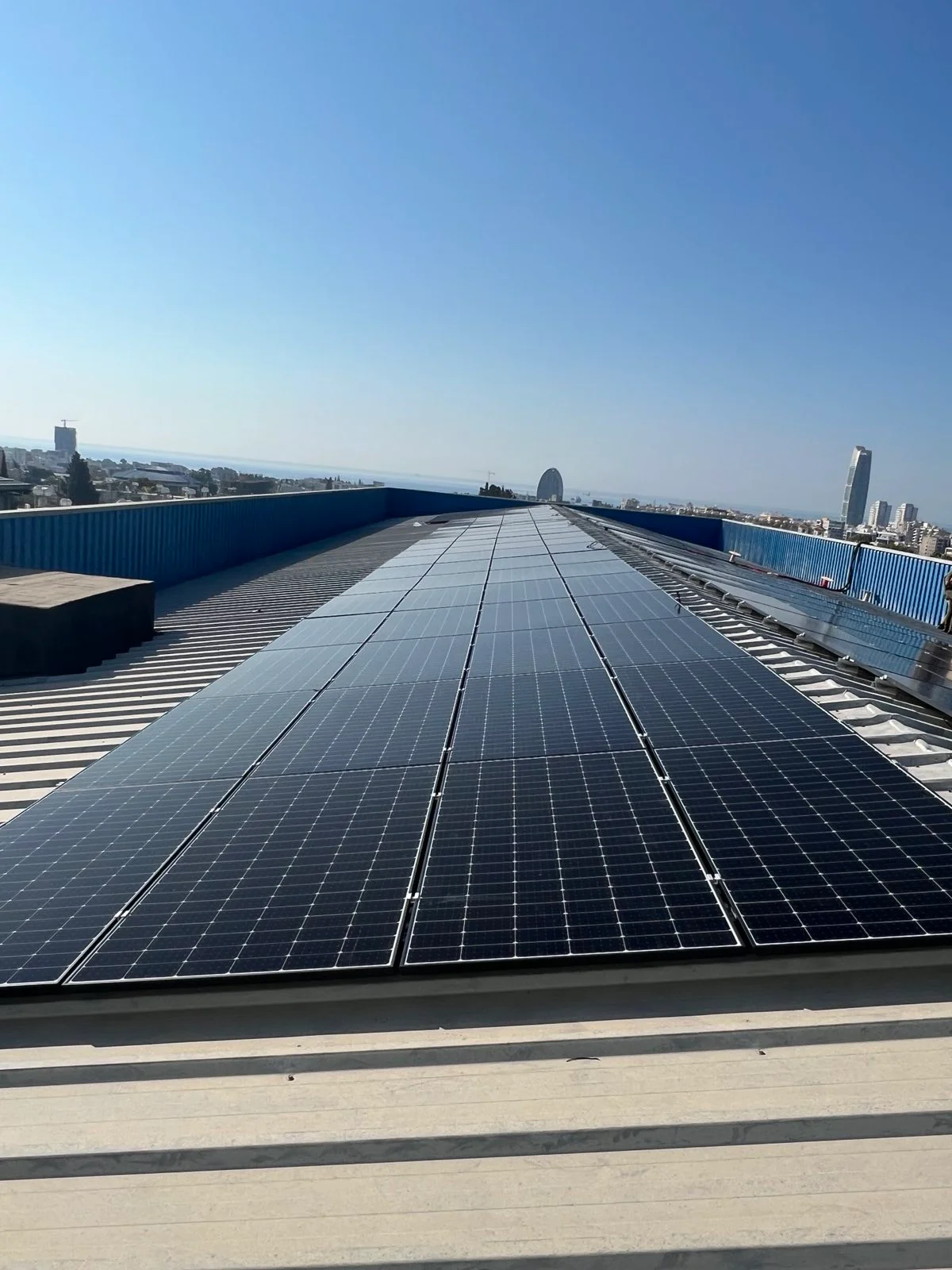
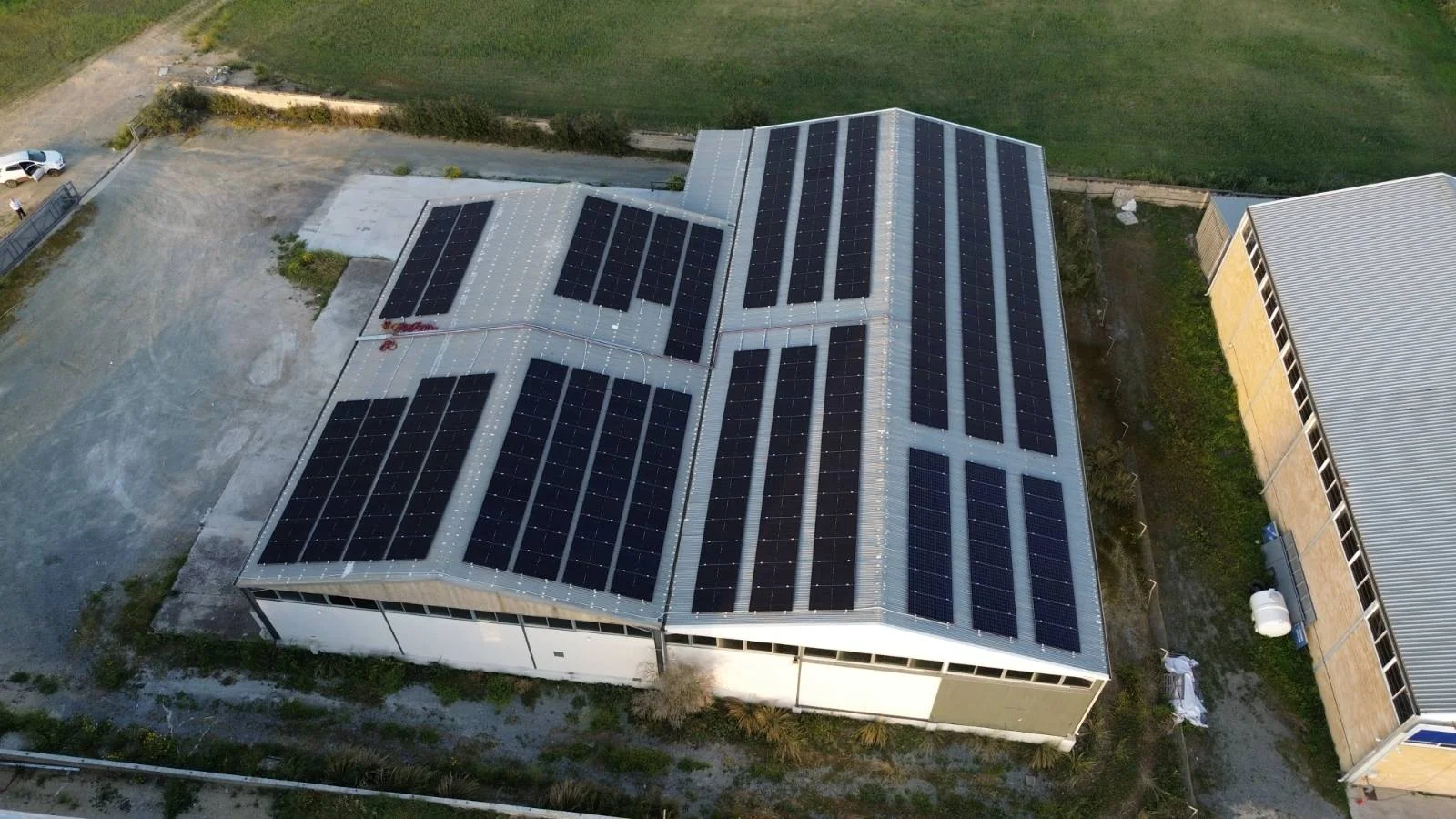
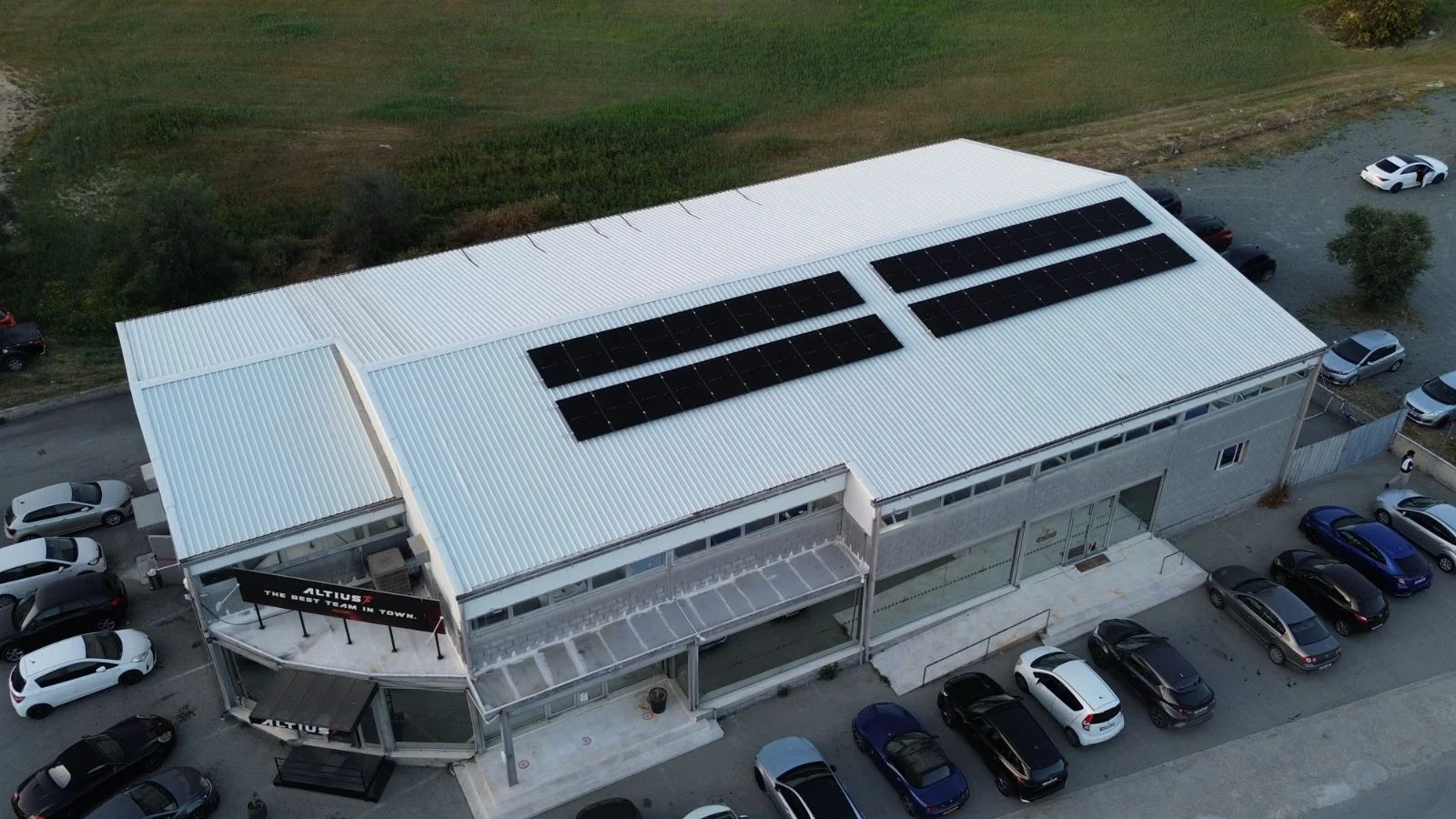
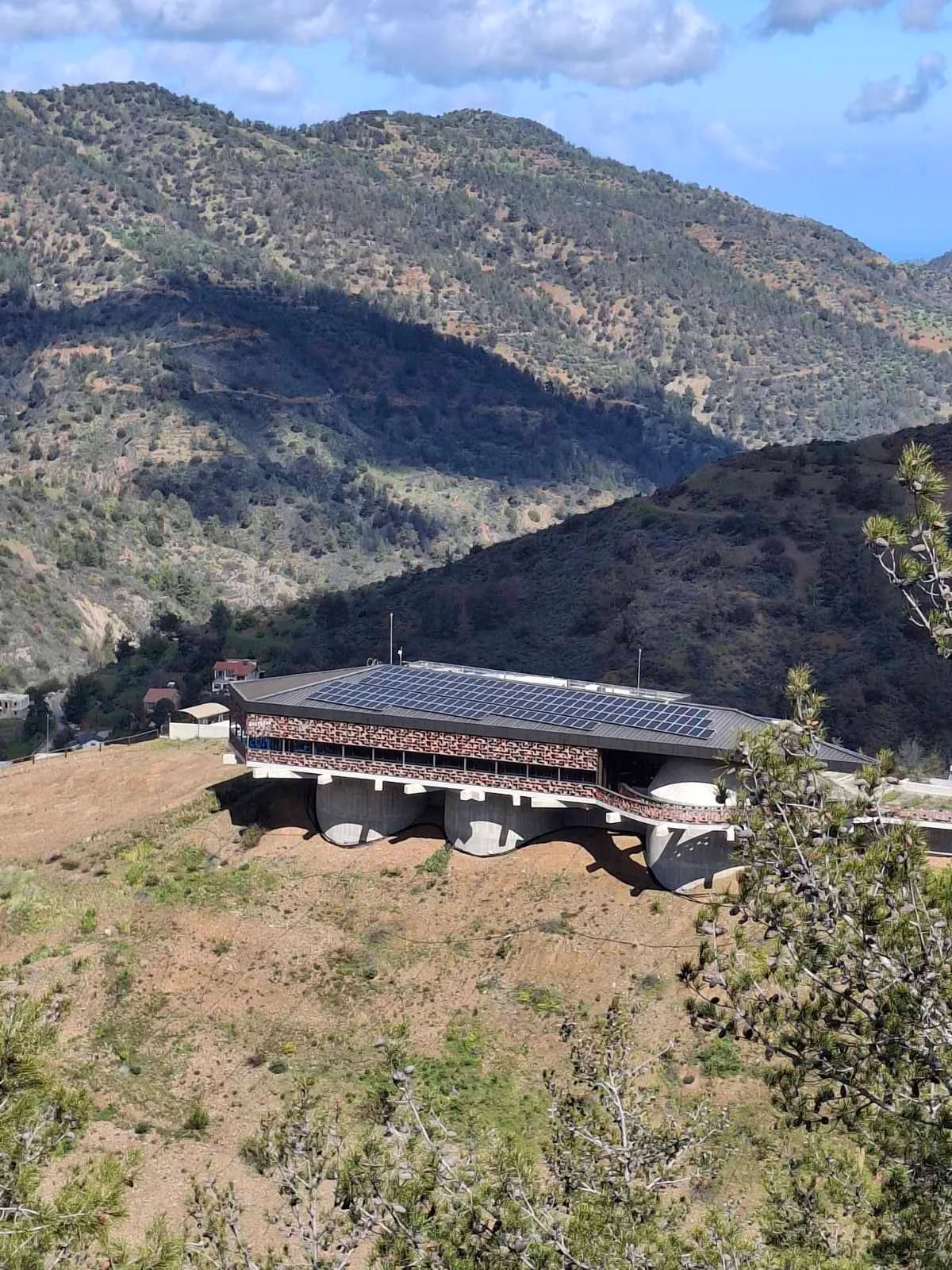
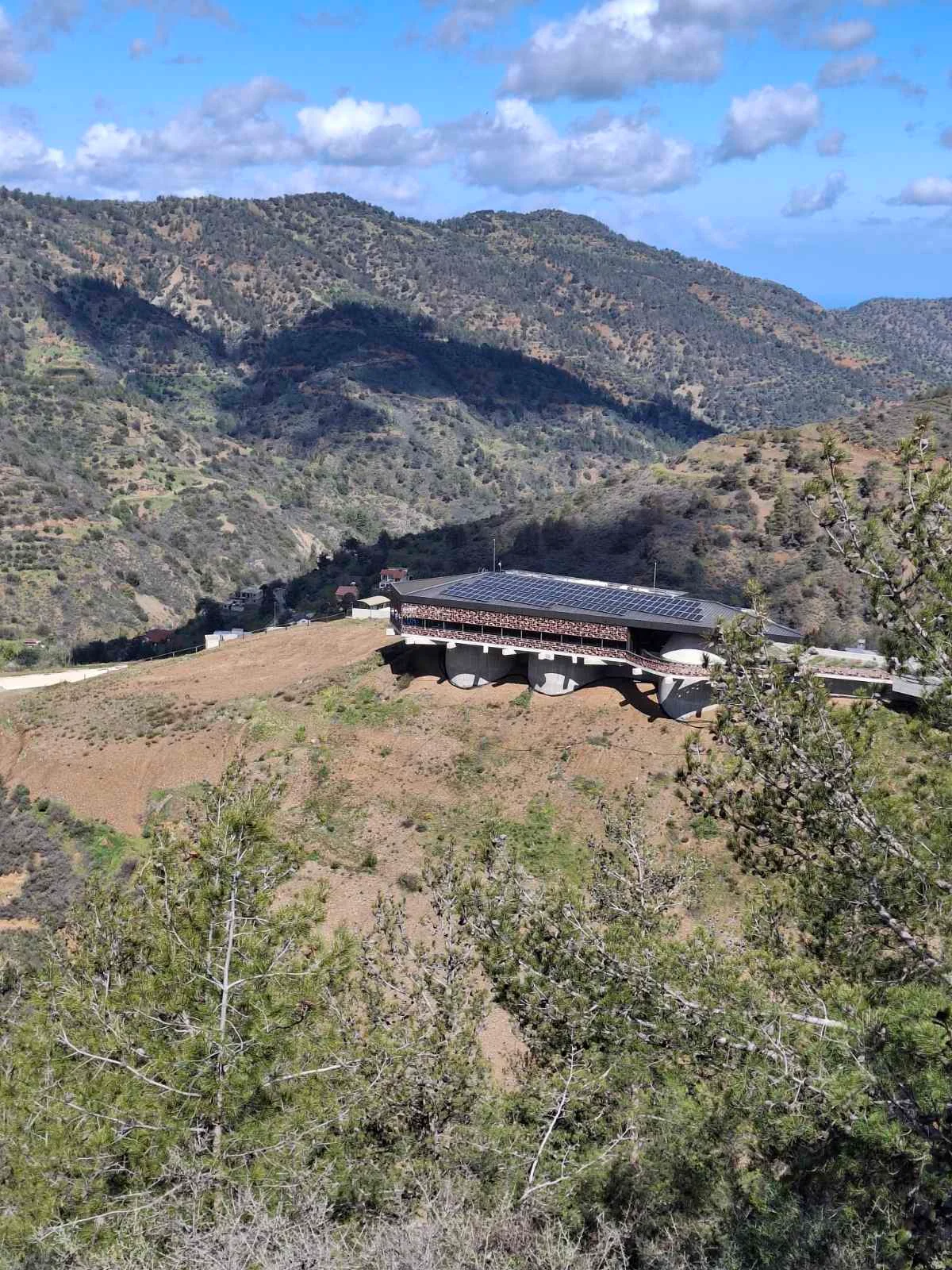
Six steps, each overseen by a single engineer, starting at the first visit and ending when your system's generation goes live in the app.
We gather a year of electricity bills, along with half-hourly data wherever it exists, establishing what your business genuinely draws and at which times.
Structural capacity, shading, roof condition, cable routes and switchgear all get inspected before any drawing gets produced.
Engineers size the array, select modules and inverters, model annual yield, then present financial projections with every assumption stated plainly.
Gesolar prepares submissions for the relevant authorities and manages correspondence through to approval. Clients sign; we take care of the rest.
In-house crews carry out the work, typically two to six weeks at commercial scale, followed by testing and utility connection.
Remote software tracks performance continuously, flagging faults long before they appear on a bill. Scheduled cleaning and inspection hold output at the level projections promised.
Fifteen people, every one of them directly employed. Nothing gets handed to a subcontracted crew you have never met, which remains the single largest determinant of quality in this trade.
Certification against ISO 9001, ISO 14001 and ISO 45001 governs how our processes are documented, how environmental impact gets managed, and how workers are protected on site. For tendering clients and public bodies, those standards frequently form a procurement requirement rather than a nicety.
We fit high-efficiency monocrystalline modules selected specifically for performance under Cypriot summer heat, each tested and certified before reaching a roof. Manufacturer warranties run for decades, and the company standing behind them still answers its phone fifteen years on.
Professionalism, in practice, means the engineer who surveyed your building remains contactable after commissioning.
Pricing depends on capacity, mounting type, roof access and whether storage forms part of the specification. As broad guidance, commercial solar in Cyprus reaches payback within three to six years, after which generation is effectively free across the remaining two decades of asset life.
Fiscal support shifted during 2026. Following closure of the net metering scheme, government backing moved toward assisting net billing installations paired with batteries. Capital expenditure on business equipment may also attract allowances; your accountant should confirm treatment against current legislation.
Because programme conditions get revised regularly, we monitor announcements and tell clients exactly what applies at the moment they commit, not what applied last year.
Typical payback period for a commercial system that consumes most of its own output on site, followed by roughly twenty years' generation under a performance warranty.
Request a quote built around your building, energy use and operating hours; an engineer will then arrange to visit your site within a few working days.
A commercial photovoltaic system in Cyprus generates electricity for business premises from panels fixed to a roof, raised over parking, or set on open ground, typically ranging from 10 kW upward to the 8 MW limit permitted per consumption account. Output is used on site as produced, with any surplus exported to the grid under net billing.
Net billing governs non-domestic solar connections on the island. Applications go to the Electricity Authority of Cyprus in its role as Distribution System Operator, while the price paid for exported units is set by the energy regulator, CERA, tracking wholesale renewable rates. Because that figure sits below the retail tariff charged on import, self-consumption drives the return.
Virtual net metering lets one photovoltaic installation offset electricity bills across several separate meters registered to the same account holder. A company running branches, warehouses or offices in different locations can therefore site generation where roof space allows, then share the benefit. Eligibility rules apply, so verify your setup first.
Sizing starts with your annual electricity consumption and the shape of your load curve, not simply the available roof. A hotel drawing power overnight differs from a factory peaking at midday. Gesolar reviews twelve months of bills, models generation hour by hour, then proposes capacity that maximises on-site use.
Larger projects typically take two to six weeks on site, depending on capacity, roof condition and access. Design, permitting and grid application usually run longer than the physical build itself, often three to five months in total. Early paperwork submission keeps the overall timeline predictable.
Most Cypriot businesses see payback between three and six years, driven by high irradiance, daytime operating patterns and rising electricity tariffs. Firms consuming the bulk of their generation internally recover the investment fastest. Panels then keep producing for decades afterwards, turning the remaining lifespan into pure operational saving.
Batteries are optional, yet increasingly worthwhile. Storage captures midday surplus for evening loads, lifting self-consumption and shielding operations from outages. Businesses with heavy after-dark demand, refrigeration or critical equipment gain the most. Where consumption already peaks during sunlight hours, a system without batteries often pays back sooner.
Requirements scale with capacity. A rooftop project usually starts by securing exemption from a building permit through the relevant District Self-Government Organisation, then proceeds to grid connection via the EAC as network operator. Ground-mounted schemes additionally require planning consent, CERA licensing, plus environmental assessment above 1 MW. Gesolar prepares every submission.
Quality monocrystalline modules carry a 25 to 30 year performance warranty, still delivering above 85 percent of original output at that point. Inverters generally last ten to fifteen years and represent the one component likely to need replacing. Mounting structures and cabling comfortably outlive both.
Look for a licensed contractor with a decade or more of local experience, ISO certification, in-house engineering rather than subcontracted labour, and references from comparable projects. Ask who handles permitting, who answers the phone after commissioning, and what response time the maintenance agreement guarantees. Warranties are only worth the company behind them.